 Daniel Ashworth
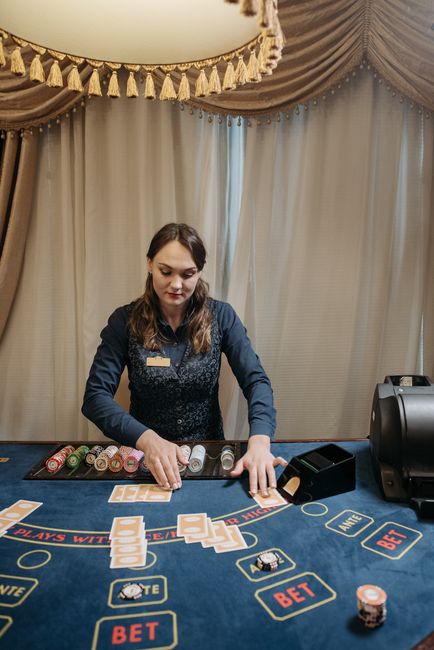
Ask ten people what "iGaming" means and you'll get ten different answers. One pictures a slot machine spinning on a smartphone at 2 a.m. Another thinks of a poker table with six players sweating a river card. A third imagines a sportsbook during the World Cup. They're all correct — and they're all missing something. The industry that generated over $90 billion in global revenue last year is not one thing. It's a collection of radically different games that reward radically different skills, and confusing them is why so many players leave money on the table without knowing it.
Slots: The Math Machine You Can't Outsmart
Modern video slots are the largest revenue segment in online gambling, and for good reason — they're simple, fast, and often beautifully designed. But the simplicity is deceptive. Every slot you play runs on a random number generator (RNG) that cycles through outcomes thousands of times per second. When you hit spin, it doesn't "decide" based on your last twenty losses. It picks a number, and that number maps to a result on the reel. Before making a choice, it helps to review สล็อตเว็บตรง.
The number that actually matters is the RTP, or return to player. A slot with 96% RTP pays back 96 cents for every dollar wagered over millions of spins. Two things follow from this:
- Volatility matters more than RTP for your session. A 96% RTP slot with high volatility can eat your bankroll in 50 spins or multiply it by 500. A low-volatility slot will grind you down slowly. Neither is "better" — they suit different temperaments.
- No strategy changes the house edge. There is no hot or cold streak. There is no pattern in the reels. Anyone selling you a "slot system" is selling you a story.
What you can control: bet sizing, session length, and game selection. If you have a $100 bankroll and you're playing a slot with a $1 minimum bet, 100 spins is a realistic session. That's the actual game — managing time and exposure, not beating the math.
Table Games: Where Strategy Actually Shifts the Odds
Blackjack, baccarat, roulette, craps — these are the games where player decisions matter. Blackjack is the classic example. Basic strategy, a chart of optimal plays for every hand combination, reduces the house edge to roughly 0.5% on a standard 3:2 payout table. Play by gut and you're looking at 2% or worse. That 1.5% difference doesn't sound huge until you run 500 hands through it.
Baccarat is nearly pure chance — the banker bet carries about a 1.06% house edge and the player bet 1.24%, which is why serious players ignore the tie bet at 14%+ edge. Roulette is a coin flip dressed up: European single-zero wheels give the house 2.7%, American double-zero wheels give it 5.26%. Same game, nearly double the edge. Choosing the European table is free money over time.
Craps is the most misunderstood. The pass line with full odds can drop the house edge below 1% if you're at a table that allows 5x odds or higher. Most casual players ignore the odds bet because it "feels" like an extra risk. It's actually the only bet in the casino with zero house edge.
Poker: The Only Game Where You Compete Against People
Here's the thing that separates poker from everything else in iGaming: you're not playing against the house. You're playing against other players, and the house takes a rake. That changes everything.
In a slot, the RNG doesn't care if you're tired, tilted, or distracted. In poker, those things cost you money, and they cost your opponents money too. A skilled player can achieve a positive expected value over thousands of hands. That's not possible on a roulette wheel.
But "skilled" is doing a lot of work in that sentence. The modern online poker ecosystem is brutal. Solvers — software that calculates game-theory-optimal play — have pushed the top levels toward near-perfect play. If you're playing $1/$2 no-limit hold'em against regulars running three monitors, you're not playing the game you see on TV. You're playing a math competition with cards involved.
Where does a recreational player have a shot? Live low-stakes games, tournaments with large fields and fast structures, and softer online pools at unusual hours. The edges are thinner than they were in 2010, but they exist.
What Sports Betting Actually Rewards
Sports betting sits in its own category. There's no RNG, no cards, no wheel. There's a line — a number set by oddsmakers — and your job is to find bets where the true probability is on your side.
The bookmaker's margin is baked into the odds. A standard -110 line on both sides of a bet means you need to win about 52.4% of your bets just to break even. The public often bets favorites and overs blindly, which creates value on underdogs and unders for disciplined bettors. But profitable sports betting requires work most people won't do: tracking line movement, understanding injury reports, and accepting that variance means even good bets lose.
Promos are the one edge most casual bettors ignore. Sign-up bonuses, odds boosts, and risk-free bets are worth real money if you read the terms. A $500 risk-free bet with a 10x rollover is not free money — it's conditional value, and it requires bankroll to clear. Run the numbers before you claim it.
The Bankroll Is the Game
Every category above eventually comes down to this: how much you're willing to lose, and how long you can stay in action. Slots players blow up in thirty minutes because they bet too big. Poker players go broke because they sit at stakes their bankroll can't handle. Sports bettors chase losses and torch their edge in a weekend.
A simple rule that works across all of them: never bet more than 1-5% of your dedicated bankroll on a single decision. If you have $200 set aside for slots, that's $2-10 per spin. If you have $1,000 for poker, that's $50 buy-ins. If you have $500 for sports, that's $5-25 per bet. The exact number matters less than the discipline.
Where to Put Your Time
If you want entertainment with a predictable pace, slots are fine — just pick high-RTP games and accept the math. If you enjoy making decisions and want the best odds in the building, blackjack and craps with odds bets are the most efficient. If you want a real chance at profit, poker and sports betting are the only realistic paths, and both demand study, tracking, and emotional control that most players don't have.
There's no wrong answer here except pretending the games are the same. They're not. The people who last in iGaming are the ones who know exactly which game they're playing, why they're playing it, and what they're willing to lose to find out if they're right.


